Trump honors Microsoft’s CEO after Vance drops an H-1B visa hammer on the company
WASHINGTON (AP) — President Donald Trump celebrated tech billionaires for their contributions to America on Thursday only hours after a company run by one of them, Microsoft, was accused by
Intelligence Engine
AI-enhanced article — original source was truncated. Full analysis generated by GeoMoney AI.
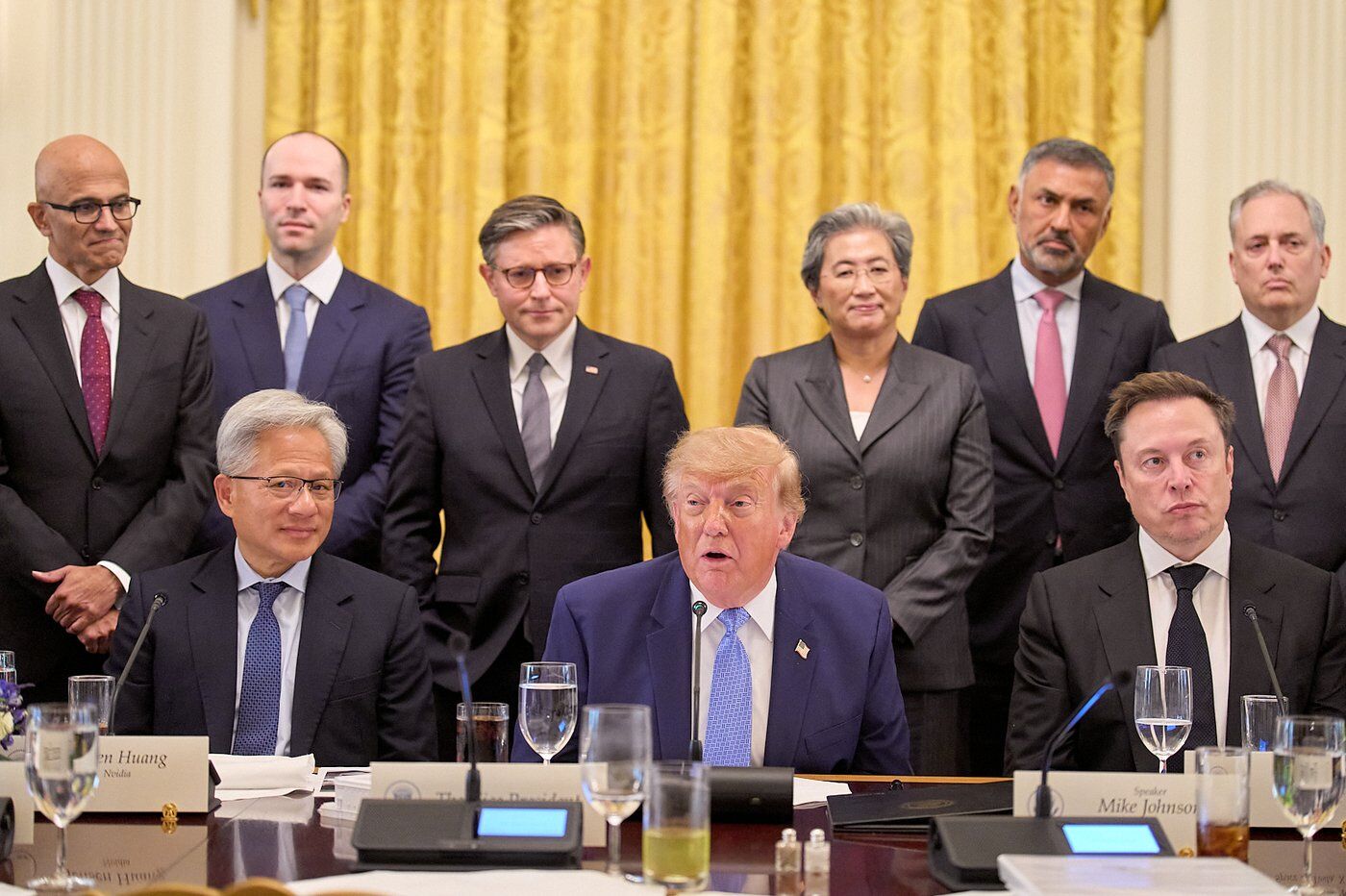
President Donald Trump hosted a gathering of technology executives at the White House on Thursday, publicly lauding their contributions to American economic dominance mere hours after his vice president, JD Vance, delivered a pointed critique of Microsoft’s hiring practices regarding H-1B visas. The juxtaposition underscored the persistent tension within the administration’s "America First" coalition between the demand for high-skilled immigration to fuel the artificial intelligence race and the political imperative to protect domestic labor markets.
The event, framed as a celebration of American innovation, featured prominent figures including Microsoft CEO Satya Nadella, Apple’s Tim Cook, and Google’s Sundar Pichai. Trump praised the executives for committing billions in domestic investment, specifically highlighting Microsoft’s recently announced $80 billion capital expenditure plan for AI-enabled data centers in fiscal year 2025. "These are the companies that are going to make America the undisputed capital of artificial intelligence," Trump stated, signaling that the administration views Big Tech’s infrastructure build-out as a matter of national security as much as economic policy.
However, the congenial atmosphere stood in stark contrast to remarks made by Vance earlier in the day. Speaking at a separate forum, the Vice President singled out Microsoft for what he characterized as an over-reliance on the H-1B visa program to displace American workers. Vance cited data suggesting the company had secured thousands of visas for foreign nationals while domestic computer science graduates faced a tightening entry-level market. "We cannot have an immigration policy that serves the HR departments of major corporations at the expense of the American middle class," Vance argued, framing the issue as a betrayal of the populist mandate that swept the administration into power.
The friction exposes a strategic fault line. The H-1B program has long been the primary mechanism through which Silicon Valley imports specialized talent, particularly from India and China, to staff the research and engineering roles critical to maintaining a lead in generative AI. Restricting the flow of these visas—a priority for the nationalist wing of the Republican Party—risks creating a talent vacuum that could slow the very data center expansions Trump was celebrating. Microsoft and its peers have consistently argued that the domestic pipeline of advanced STEM graduates is insufficient to meet the explosive demand driven by the AI arms race against China.
For Nadella, an Indian-born naturalized citizen who has navigated previous administration crackdowns on immigration, the day represented a delicate diplomatic balancing act. He publicly thanked the President for the recognition of Microsoft’s investment while privately managing the fallout from the Vice President’s broadside. The episode serves as a real-time case study in the transactional nature of the current political-technology interface: access and favorable regulatory treatment on antitrust or AI governance are contingent on alignment with the administration’s labor nationalist agenda.
Financial markets reacted calmly to the mixed signals, with Microsoft shares closing marginally higher, suggesting investors view the rhetorical conflict as political theater rather than a precursor to immediate policy action. Yet, the strategic signal is clear. As the administration drafts potential executive orders on AI governance and immigration reform, tech giants face a new calculus: the cost of doing business in Washington now requires a demonstrable commitment to "America First" hiring metrics, not just capital expenditure announcements. The resolution of this tension will likely dictate the velocity of the U. S. AI build-out over the next four years.
Read Full Intelligence Briefing
Access the complete report and original data sources from Thecanadianpressnews.ca.
View Source MaterialRelated Intelligence
Rigging the Game: How China Undermined Western Manufacturing and Helped Hollow Out American Industry
11/23/2026

China's $1.7 trillion AI rout turns once-hot tech trade into a losing bet
11/23/2026

‘It’s too late’: Ford, BMW, Hyundai issue same fresh warning as China takes over major markets. Is America next?
11/22/2026